Analyze your data. Get practical insights. Improve your performance.
Dive into an overview of the product.
Discover how TADA can solve your business issues.
Data analytics everywhere.
By industry
customer Stories
Learn about the ways our customers use TADA
By analytics needs
Discover all of our ressources to learn about TADA our Augmented Analytics software but also Predictive Analysis, Machine Learning, Artificial Intelligence and more
Getting started
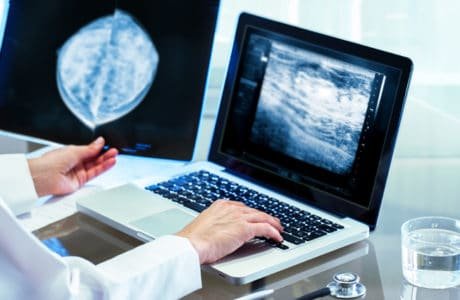
Breast cancer is one of the most common cancer today in women. A breast mass in patients means a tumor. It does not necessarily imply a malignant one. Hence, American oncologists perform a fine needle aspirate (FNA) on the cancer patient.
Then, they examine the resulting cells and extract the cells nuclei features. The most critical step is this feature extraction.
The goal is to select elements of this image that one can measure for further computational analysis. And at the same time, the measures should be representative of cancer severity. We aim to use elements of the image measured as either a diagnostic or a prognostic indicator. It includes tumor malignancy and a related survival rate.
The typical features extracted are:
The diagnosis of cancer has been mostly dependent on the traditional approaches, using trained professionals’ expertise. However, a senior trained professional is not always available.
TADA’s Machine Learning approach can help automate, in part, the cancer risk prediction. Thus senior and junior professionals alike get access to the same analyzed data from cancer patients. They can provide a better, quicker diagnosis, hence improving survival rates.
It poses the following oncology question:
Can cancer prediction distinguish malignant from benign tumors?
The TADA predictive models’ results reach a 97% accuracy based on real data for breast cancer prediction. Breast cancer is the most common cancer among women, accounting for 25% of all cancer cases worldwide. It affects 2.1 million people yearly. Early diagnosis through breast cancer prediction significantly increases the chances of survival.
Fine needle aspiration biopsy (FNA) is a biopsy that produces fast, reliable, and economic evaluation of tumor lesions. It is a minimally invasive scheme that utilizes a fine needle to aspirate tissue from mass lesions. It expedites the sequence between the diagnostic and the beginning of therapy for breast cancer.
FNA is ideally conducted by an expert medical biologist who can follow with prompt microscopic examination. Research indicates that the most experienced physicians can diagnose breast cancer using FNA with a 79% accuracy.
TADA has selected the following five main criteria out of the ten available in the dataset. They approximately bear the same weight in the decision to identify breast cancer:
An 18% improvement in breast cancer predictions happens through TADA (from 79% to 97%). The artificial intelligence tool distinguishes benign from malignant tumors. It can also help the oncologist understand how each element measured impacts the diagnosis. For instance, it can prove the relationship between the tumor’s overall dimension and breast cancer chances. v
In one week, oncologists gained significant support in their cancer diagnosis and their fight against breast cancer by:
Talk to us on how you can make sense of your data and achieve success.
© MyDataModels - All rights reserved | Credits | Terms of use | Privacy and cookies policy